Knowledge

The answers before you ask

We write about what customers ask us: choice of material, method, price and design.

How it fits together

The order the questions arrive in

The knowledge base is written for someone buying a cast component who does not do it every week. The articles answer the questions we actually get in an enquiry, in the order they arrive.

Looking for a manufacturer? Cast components in Norway has a checklist for choosing a supplier and comparing quotes, including against imports.

Material first. Zinc or aluminium is the first fork: one is lighter, the other gives thinner walls, sharper detail and longer die life. Once the metal is settled, high pressure or gravity die casting decides what the part will take afterwards — only gravity cast parts are normally heat treated.

Then method and economics. Cast or machined from billet is the arithmetic that decides whether casting pays at your volume at all, and what a casting tool costs explains the investment that makes that arithmetic hard the first time.

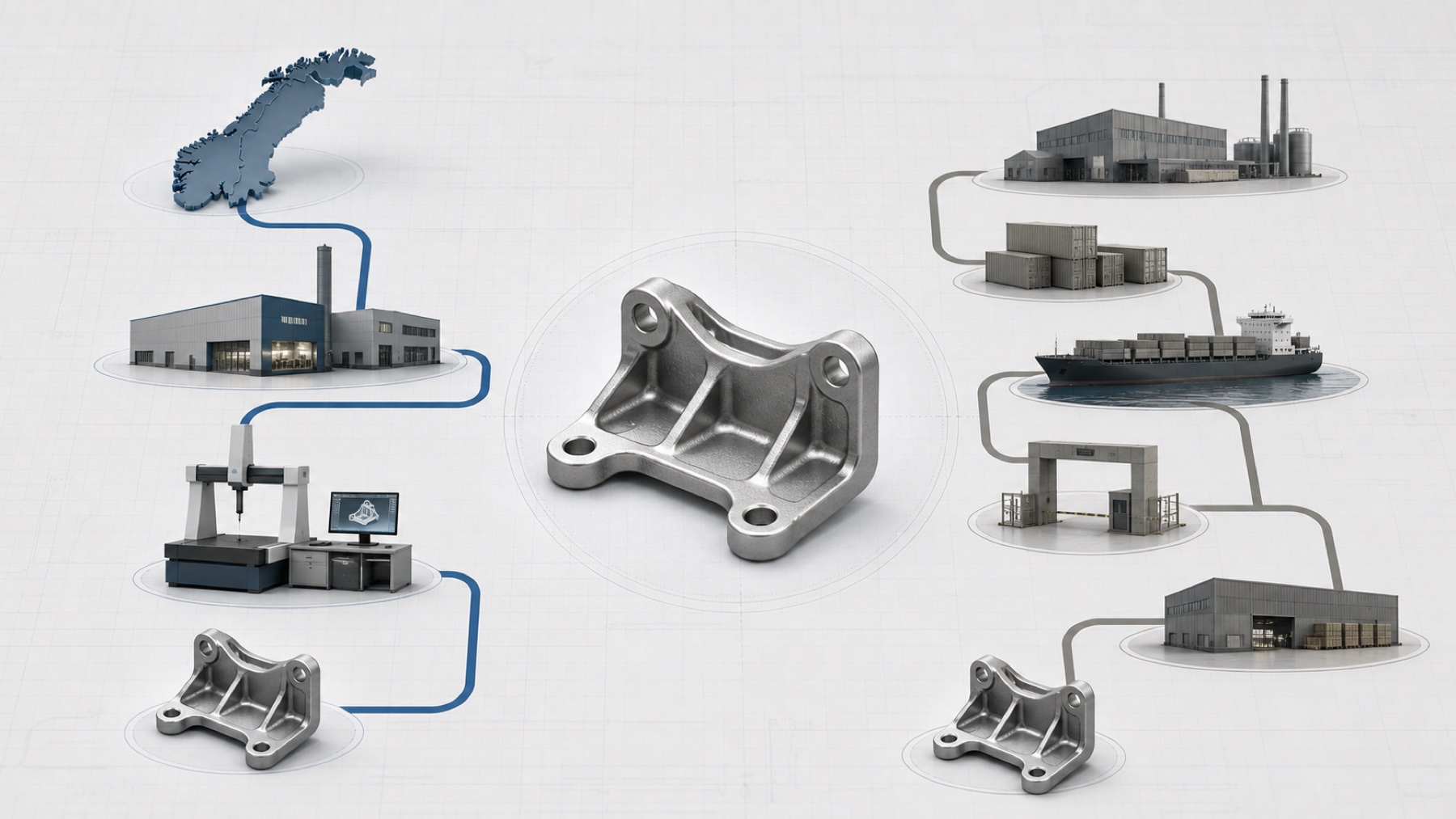
Then design. Seven moves that make a part castable is the shortest route from a drawing made for machining to a drawing made for casting. Casting tolerances to ISO 8062 sets out what holds as cast and what has to be machined, and threads in cast parts takes the question that arrives in almost every enquiry. From drawing to assembly-ready part shows who does what along the way, including the work done by subcontractors.

Finally regulation. CBAM from 2027 is the one change that moves the arithmetic on imported castings over the next few years.

The terms that recur through all of this are explained in the glossary. Every term has a stable link you can cite, and a definition precise enough to use in a specification.

The articles use no figures we cannot stand behind. Where an industry figure is used instead of our own, the article says where it comes from and what it covers.
Articles

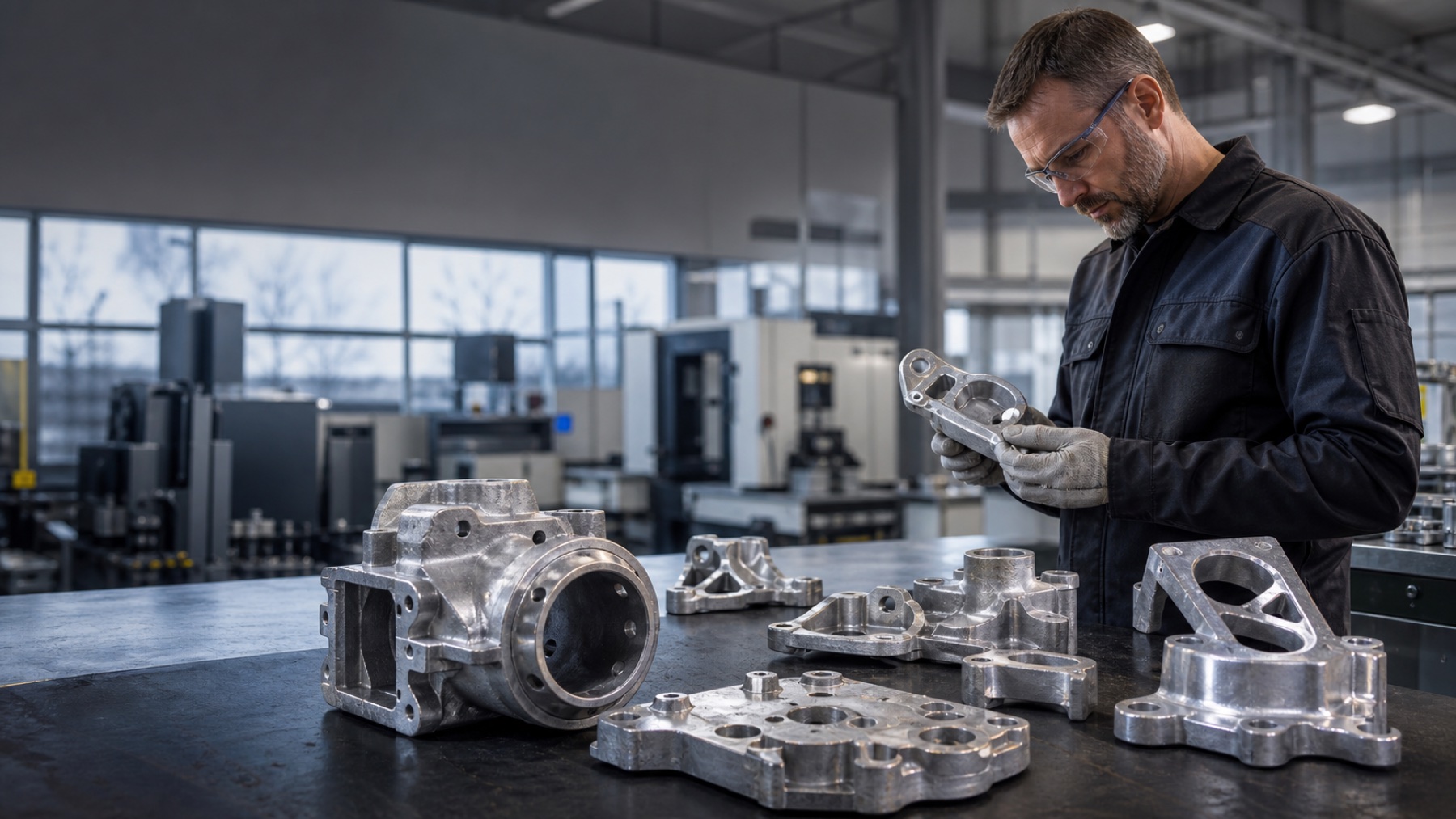
Threads in castings: cast, cut or threaded insert?
Editorial illustration
Design

Threads in castings: cast, cut or threaded insert?

Two figures decide the choice: how many times the screw comes out again, and at what torque. Here are the three methods, when each is right, and what has to be correct in the hole before the thread can be made.

6 min
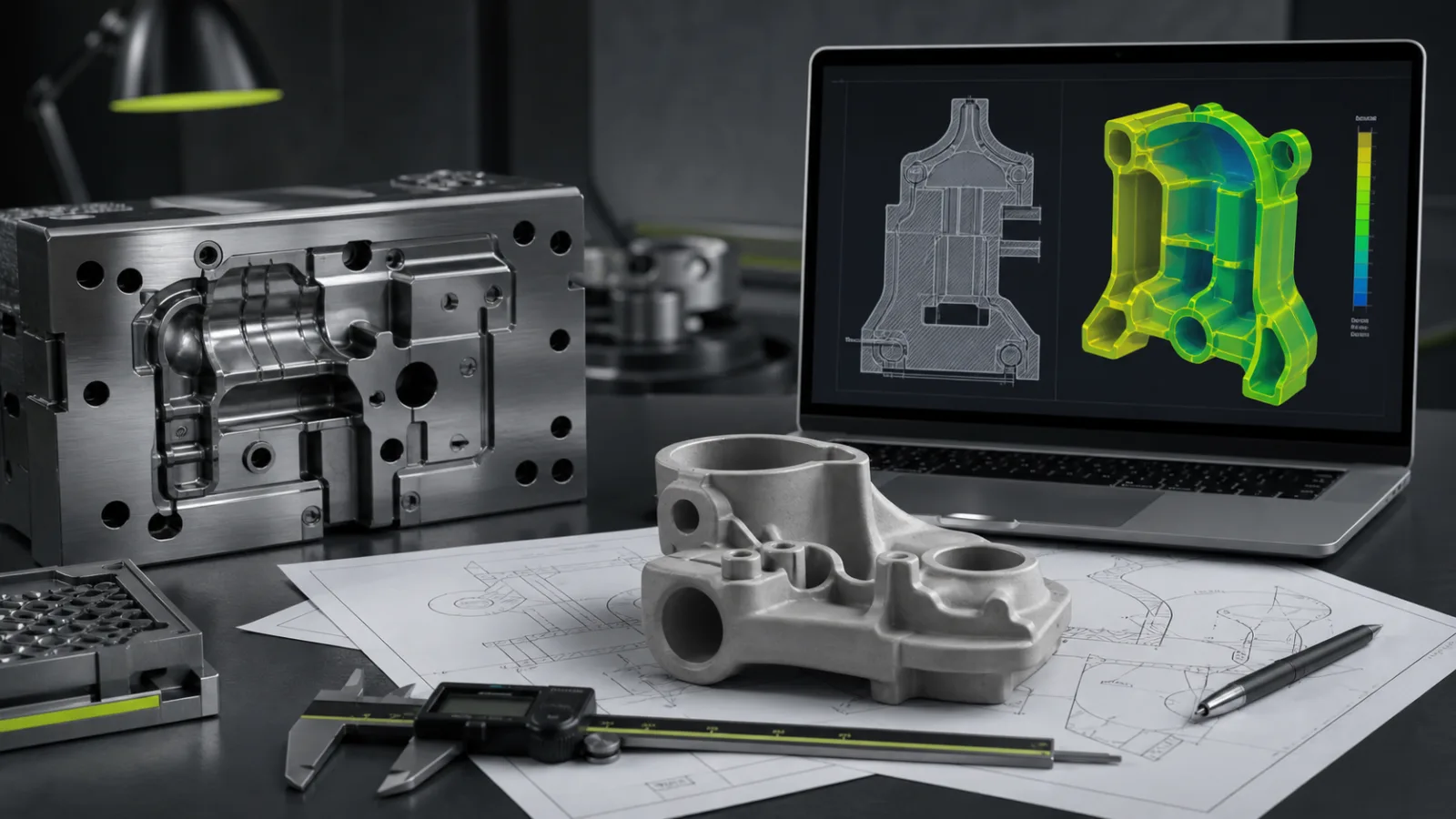
Zinc vs aluminium die casting: how to choose the material
Editorial illustration
Material selection

Zinc vs aluminium die casting: how to choose the material

Zinc vs aluminium die casting comes down to six questions, and weight is only the first. Here is the decision table, the three most common wrong turns, and why the heavier metal is sometimes the right one.

6 min

Glossary

The terms used in a casting enquiry, explained briefly.

High pressure die casting
A casting process in which molten metal is injected into a steel die under high pressure and solidifies within seconds.
Gravity die casting
A casting process in which molten metal runs into a permanent metal mould under gravity, without applied pressure.
Sand casting
Casting into a single-use mould of bonded sand, broken up after each pour.
Injection moulding
Injecting molten plastic into a tool — the most common competitor to metal casting for volume parts.
MIM — metal injection moulding
Metal powder mixed with a binder is injection moulded, debound and sintered into a dense metal part.
Metal 3D printing
Additive manufacturing in which the part is built up layer by layer from metal powder, with no tooling.

We count visits anonymously to make the website better. Google Analytics only loads if you say yes. Read more