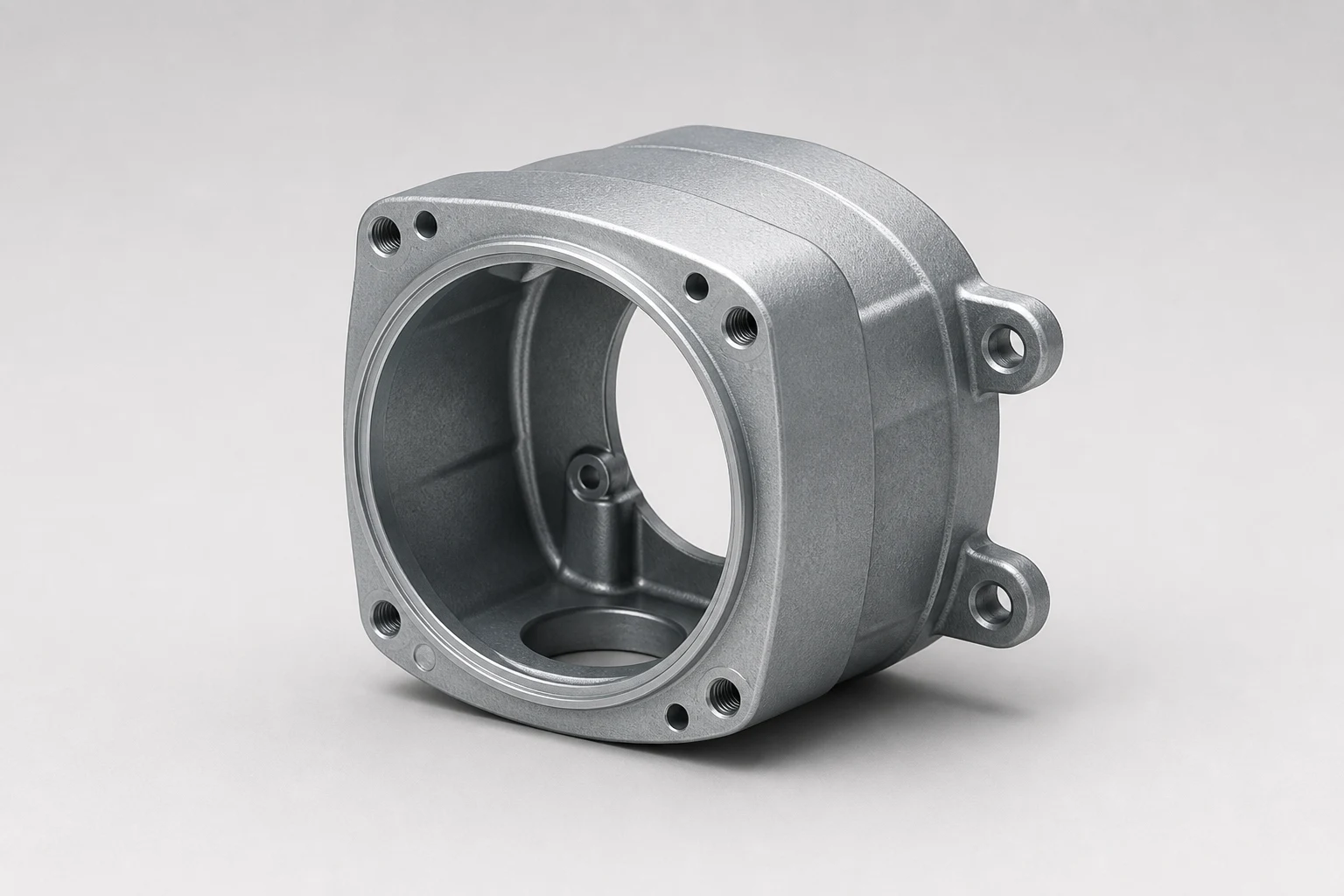
Metal components supplier in Norway: what we make

As a metal components supplier in Norway, we make brackets, housings and covers, fittings and visible parts in aluminium and zinc, cast and machined to your drawing in Råde. We coordinate the surface finishing. Everything is made in series for customers; we have no catalogue parts.

Cast brackets made to drawing

Cast brackets and other load-bearing parts made to the customer’s drawing and supplied in series. Die cast in aluminium or zinc, or gravity die cast and heat treated when strength decides. Here strength, freedom from porosity and hole position matter more than the surface.

4 product examples

Cast housings and covers in aluminium and zinc

Housings, covers and enclosures made to drawing, for electronics, audio equipment and anything else that needs protecting. Here thin, even walls, dimensional accuracy and flat sealing faces decide.

1 product example

Fittings and threaded parts made to drawing

Fittings and other parts that hold two things together, cast in zinc or aluminium and threaded in house. The value sits in the interfaces: the threads, the holes and the seating faces.

2 product examples

Visible parts

Cast parts the end user actually sees, such as furniture fittings. Appearance then becomes a specification on a par with the dimensions: parting line and ejector marks outside the field of view, an even surface and the correct colour.

1 product example

Find the part that resembles yours

Parts from a metal components supplier in Norway, sorted by the job they do

A part has to carry a load, enclose something, hold two things together or be seen. Pick the one closest to yours and you will see which requirements decide method and material, and what we need from you to quote.

Four jobs a part can do

Every part we make does one of four jobs. The requirements, the method and the price follow from which one.

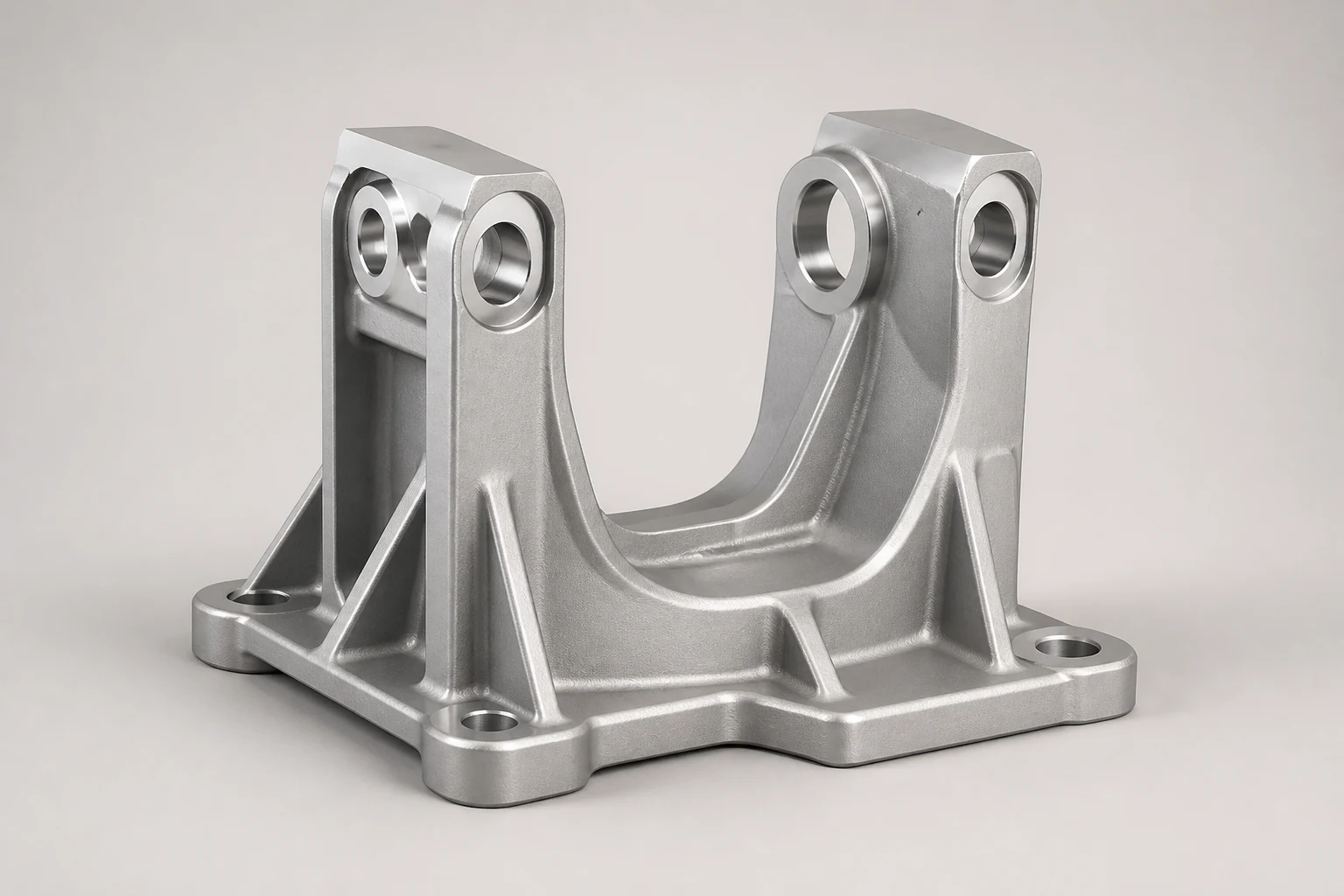
Cast brackets made to drawing

Cast brackets and other load-bearing parts made to the customer’s drawing and supplied in series. Die cast in aluminium or zinc, or gravity die cast and heat treated when strength decides. Here strength, freedom from porosity and hole position matter more than the surface.

View component type
Cast housings and covers in aluminium and zinc

Housings, covers and enclosures made to drawing, for electronics, audio equipment and anything else that needs protecting. Here thin, even walls, dimensional accuracy and flat sealing faces decide.

View component type

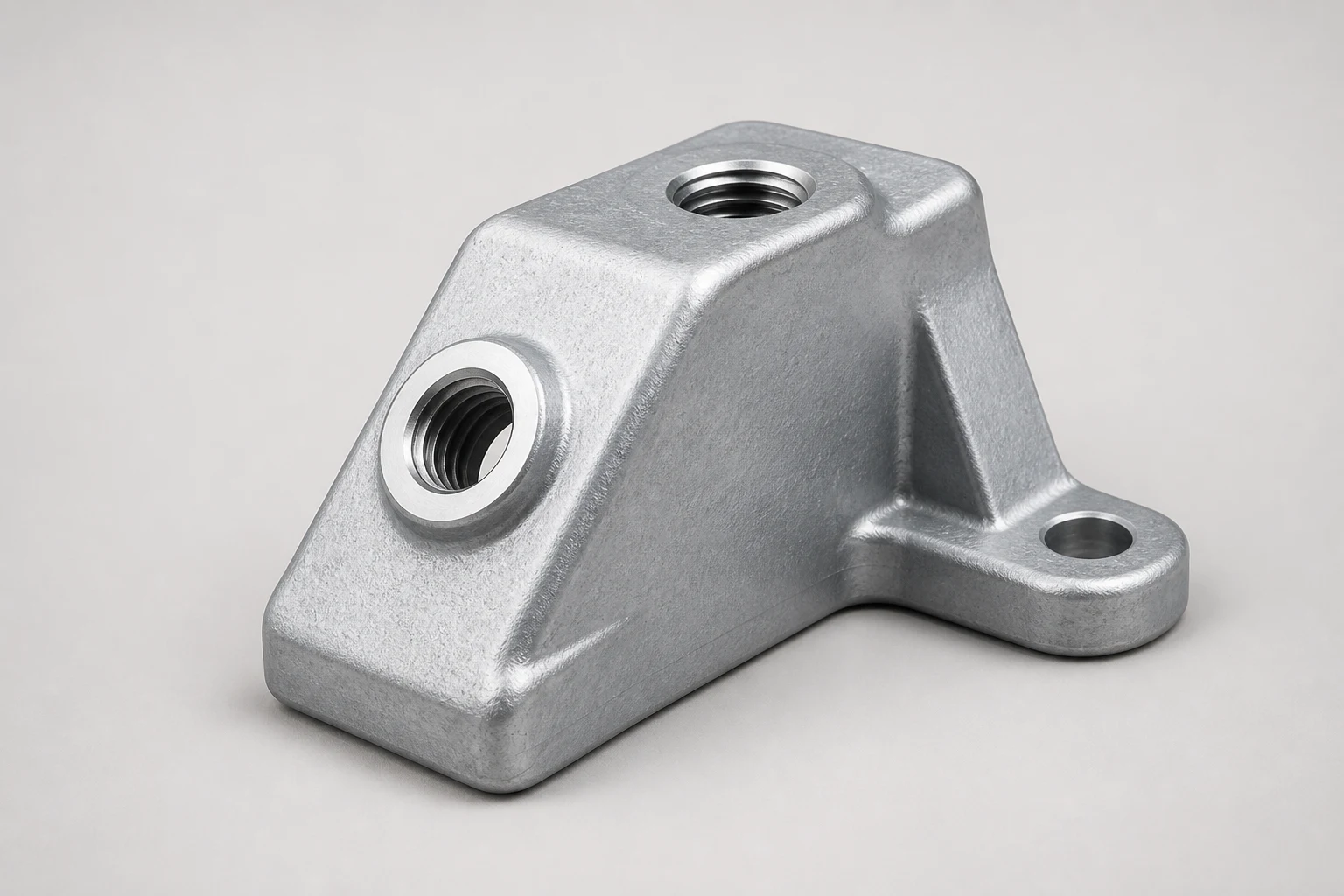
Fittings and threaded parts made to drawing

Fittings and other parts that hold two things together, cast in zinc or aluminium and threaded in house. The value sits in the interfaces: the threads, the holes and the seating faces.

View component type

Visible parts

Cast parts the end user actually sees, such as furniture fittings. Appearance then becomes a specification on a par with the dimensions: parting line and ejector marks outside the field of view, an even surface and the correct colour.

View component type

Function, requirement and method

Function, requirement and method
Criterion Critical requirements Typical method Ends up in
Brackets — carry and transfer force Strength, freedom from porosity in loaded sections, hole position, traceability Aluminium die casting; gravity die casting when the part is to be heat treated Mobility aids, garden equipment, marine interiors, vehicles
Housings and covers — surround and protect Thin, even wall, dimensional accuracy, flat sealing faces, good surface Die casting — zinc when detail or mass is the point Electronics and audio equipment
Fittings — hold two other parts together Thread quality, hole position, flatness Die casting and machining in house Furniture, general industry
Visible parts — the end user sees them Surface, parting line and ejector point placement, colour Casting and machining in house, coating at a sub-supplier we coordinate Furniture, and other products where the part is on show

When casting is the wrong method

Casting does not only compete against other foundries. It competes against every other way your part can be made — and we will tell you when one of them fits better:

  • Bent sheet metal wins when the bracket is flat or simply bent and the quantity is small. Almost no tooling cost.
  • CNC from solid billet wins at small quantities, or when the geometry is simple and you want to avoid the tooling investment entirely. The worked example shows where the line typically falls.
  • Injection moulded, reinforced plastic wins at high volume when load, heat, UV and fire are not critical.
  • Metal 3D printing wins for prototypes and the very smallest series.
  • Imported castings can win on large, standardised volumes where lead time, changes and follow-up matter little. How to compare the quotes.

Our window is the part that is too complex for sheet, made in quantities where 3D printing or machining from billet no longer pays, and where lead time, changes and follow-up matter. It is a real window, and we will tell you when your part falls outside it.

Parts we have made

The examples are anonymised and the images are illustrations — the customer design belongs to the customer.

Zinc bracket threaded in house
Editorial illustration
Zinc

Zinc bracket threaded in house

A zinc die cast bracket, threaded and finished here so the customer can take it straight into assembly. The part does not leave the building between casting and threading.

Gravity die cast bracket, heat treated
Editorial illustration
Aluminium

Gravity die cast bracket, heat treated

A load-bearing bracket where the strength requirement exceeded what high pressure die casting can deliver. The part is gravity cast precisely because it will be heat treated afterwards — the method follows the function, not machine availability.

Zinc loudspeaker housing
Editorial illustration
Zinc

Electronics and audio

Zinc loudspeaker housing

An enclosing part for audio equipment, die cast in zinc. Here weight is not a compromise — it is the function. A heavy housing damps unwanted vibration, and zinc is the heavier metal.

Send the drawing and we will look at it

STEP, PDF or DWG, plus an estimate of how many you need. If all you have is a sketch, send the sketch. We would rather see the part before the design is locked, while a change is still cheap.

Not sure where your part belongs?

You do not need to know. Send the drawing and we will look at what matters for that particular part.

We count visits anonymously to make the website better. Google Analytics only loads if you say yes. Read more