Mobility aids
Bracket for the mobility aid industry
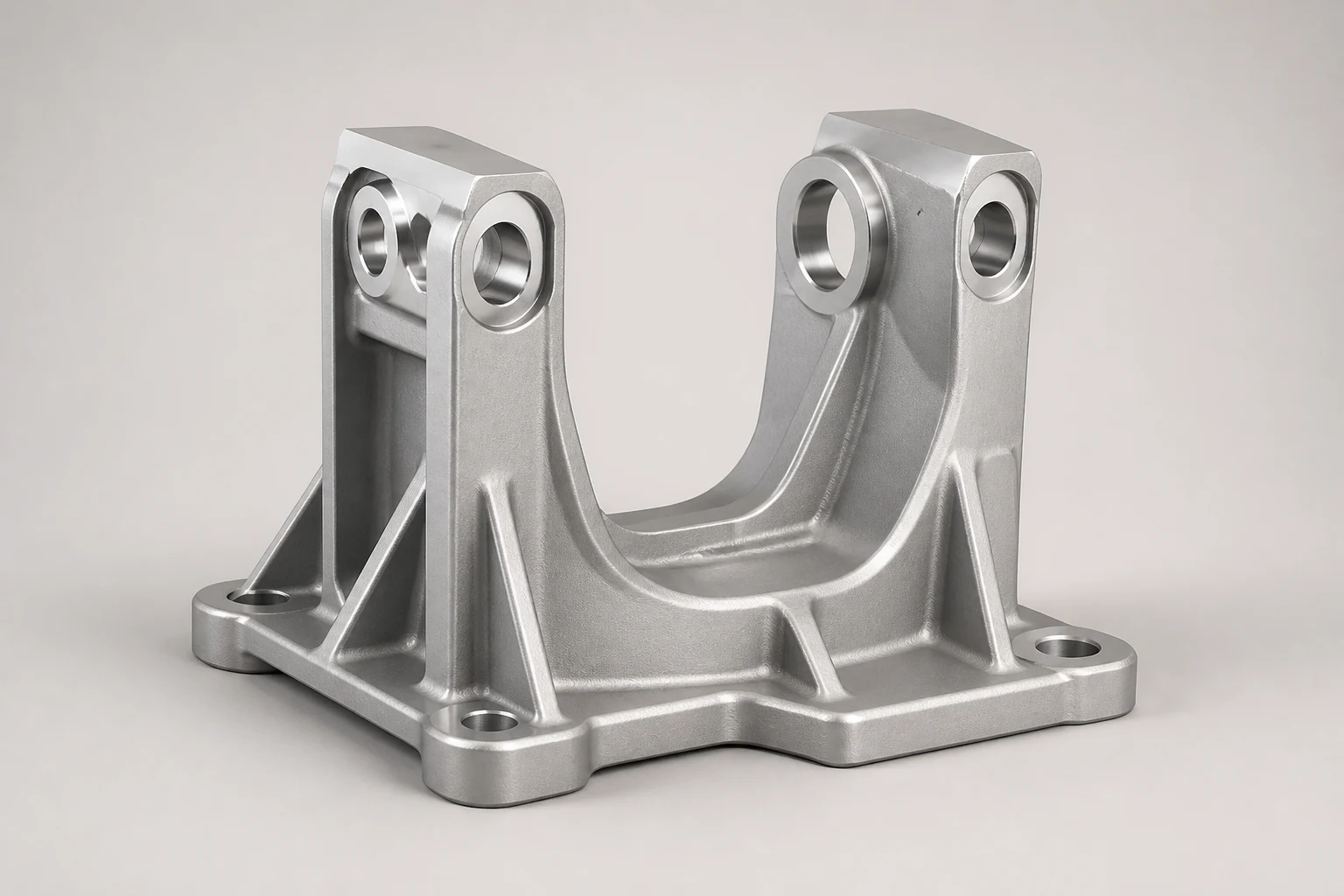
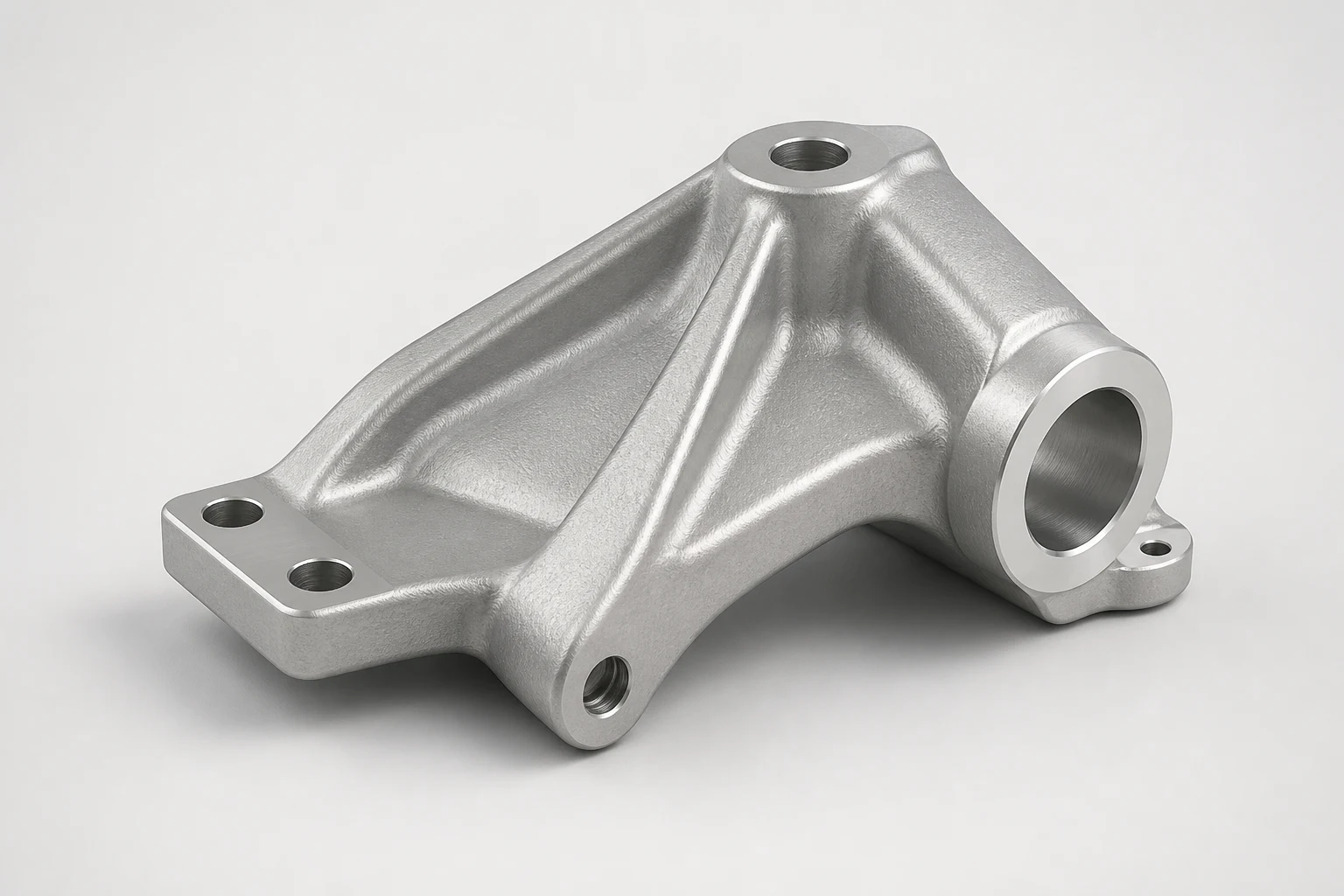
A load-bearing bracket, high pressure die cast in aluminium, for wheelchairs and walking aids. The part must be light enough for the user to lift the device, and strong enough to carry the user.
Casting and machining in Råde. Surface finishing coordinated by us.
Eight parts we have made: what the part had to do, what was difficult, and how it was solved. Customers are anonymised, and the images are illustrations.
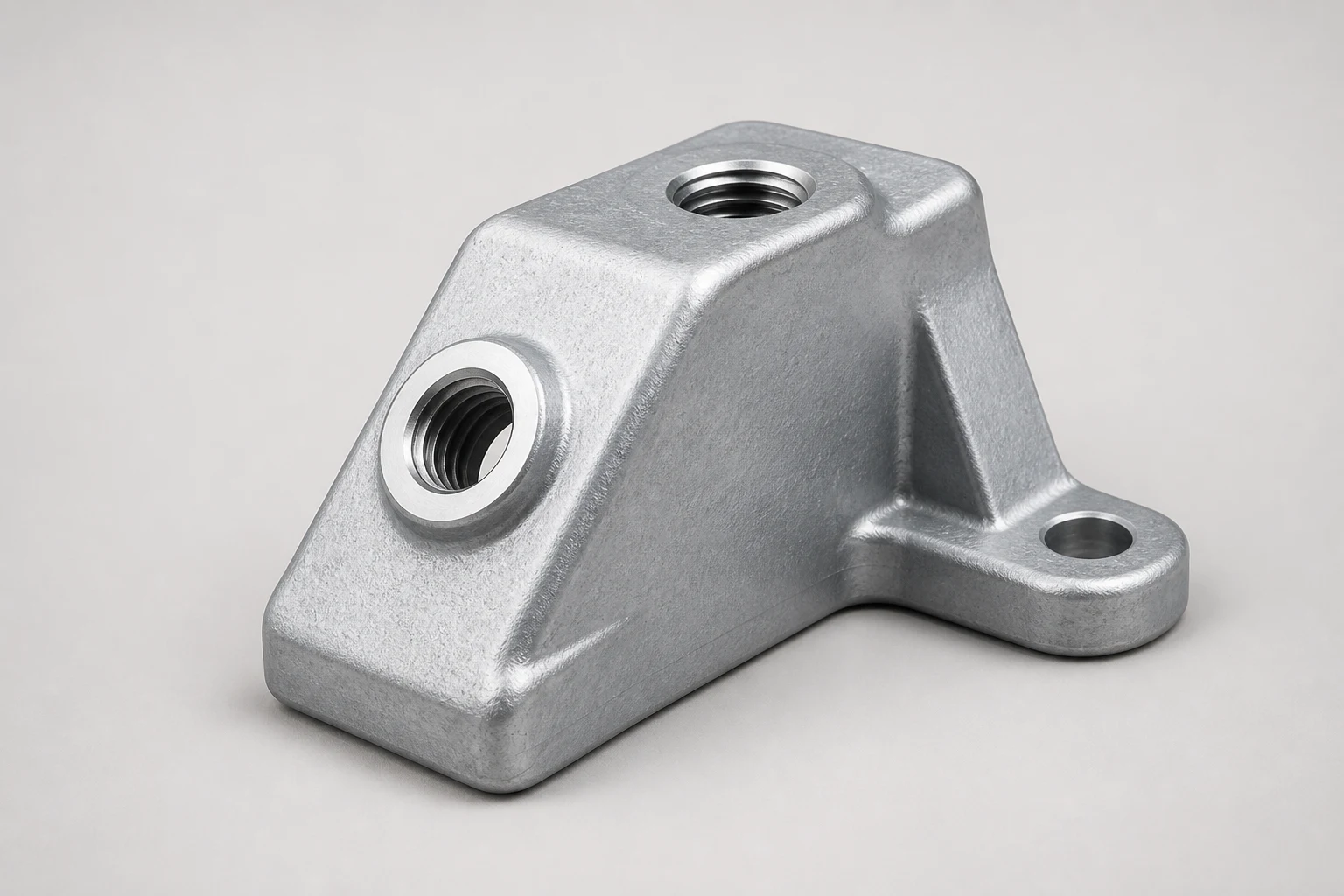
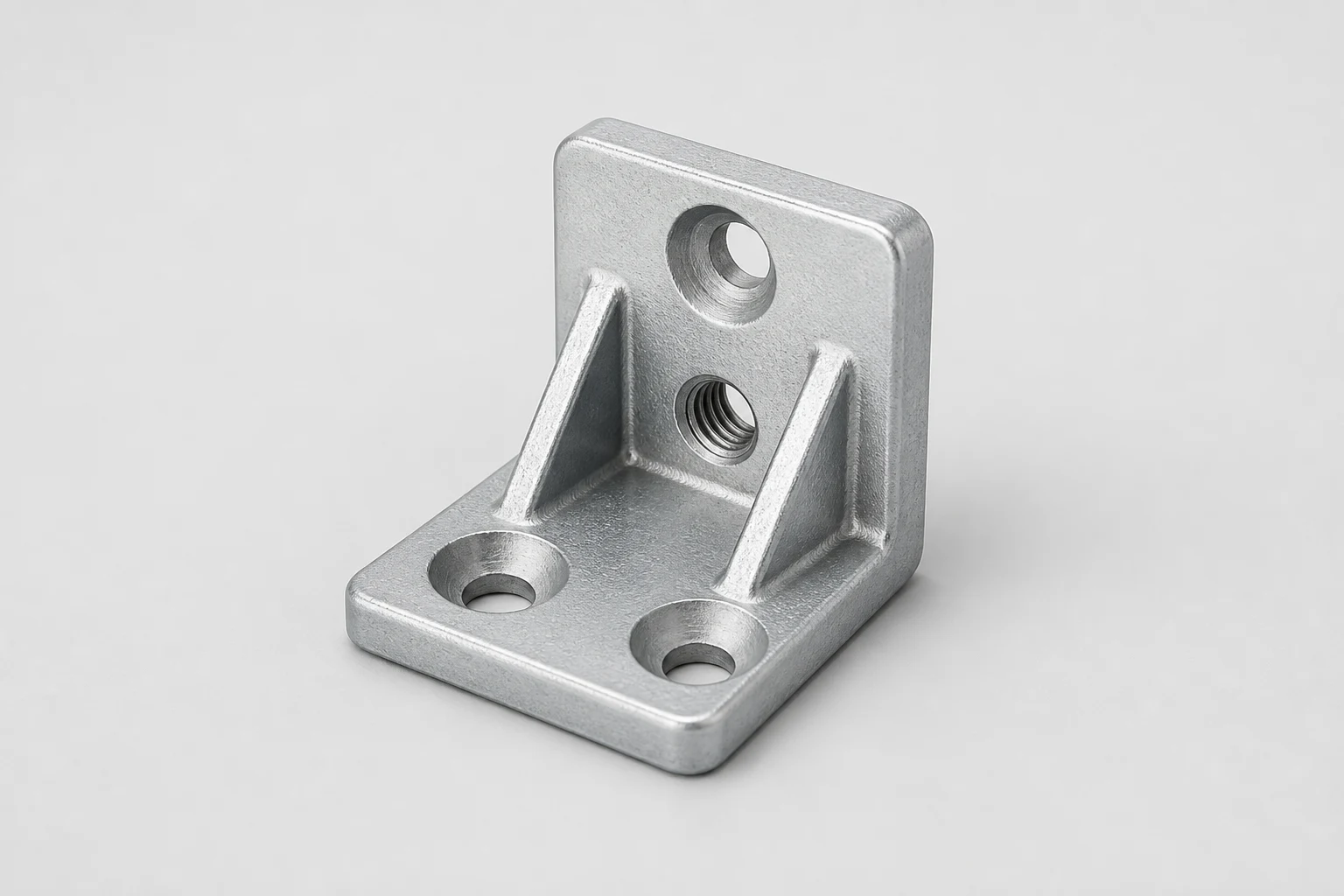
A zinc die cast bracket, threaded and finished here so the customer can take it straight into assembly. The part does not leave the building between casting and threading.
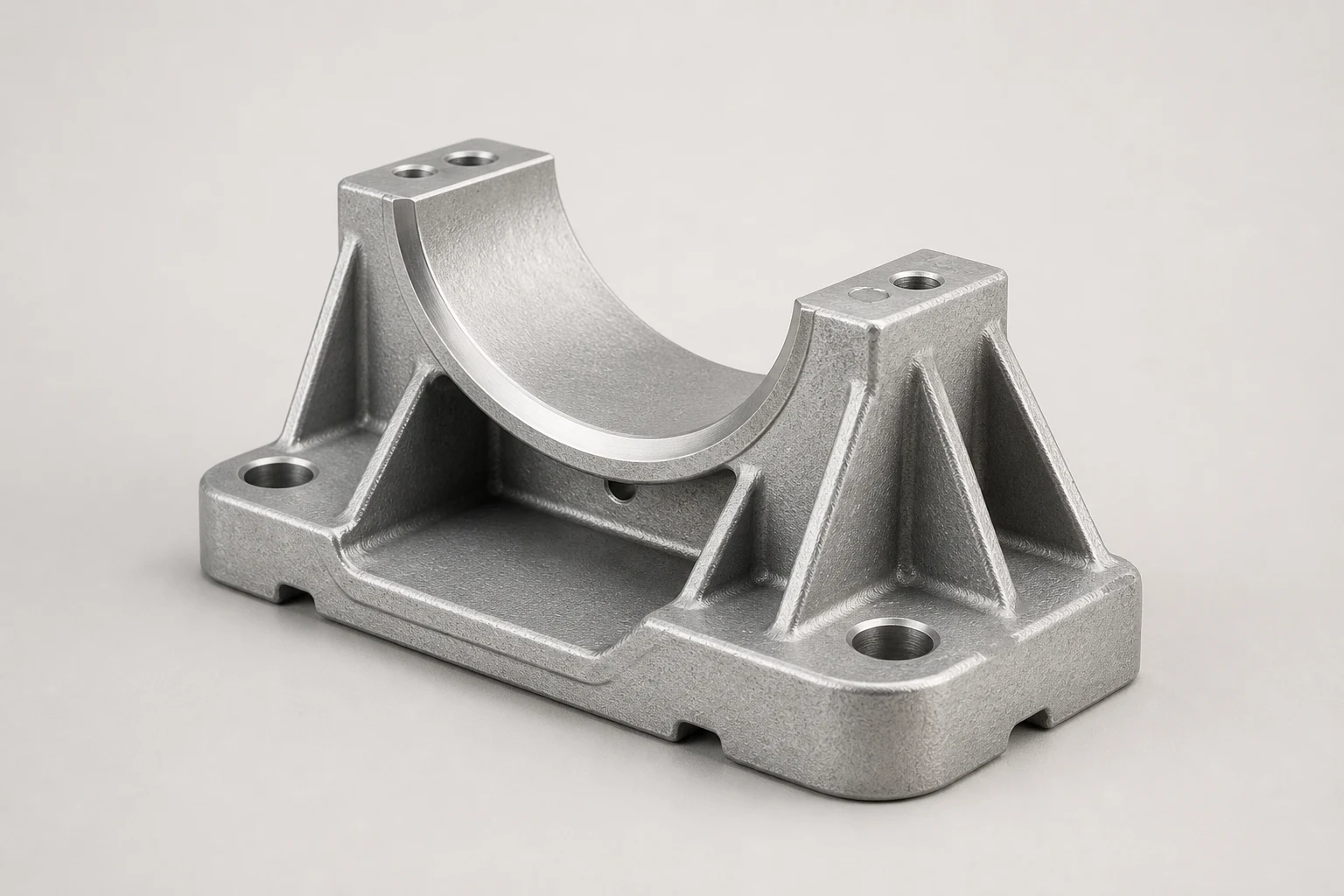
A load-bearing bracket where the strength requirement exceeded what high pressure die casting can deliver. The part is gravity cast precisely because it will be heat treated afterwards — the method follows the function, not machine availability.
Electronics and audio
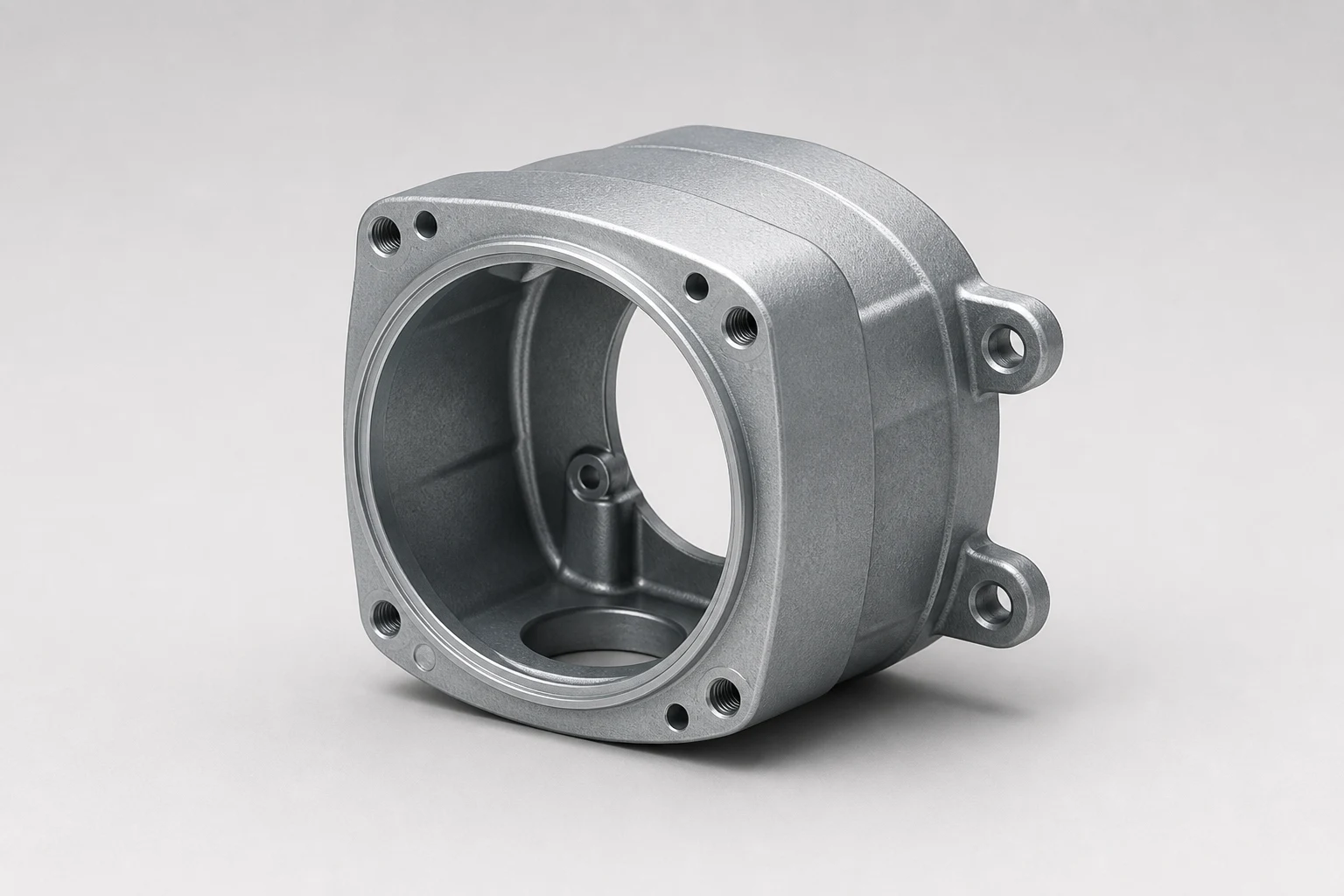
An enclosing part for audio equipment, die cast in zinc. Here weight is not a compromise — it is the function. A heavy housing damps unwanted vibration, and zinc is the heavier metal.
Mobility aids
A load-bearing bracket, high pressure die cast in aluminium, for wheelchairs and walking aids. The part must be light enough for the user to lift the device, and strong enough to carry the user.
Garden equipment
An aluminium die casting for consumer volumes, cast with the bearing fit and pressure tightness straight from the tool — with no subsequent machining.
Furniture
A joining fitting die cast in zinc. It has to hold two furniture parts together through repeated assembly and disassembly, and feel solid in the hand when the customer unpacks it.
A zinc die casting that feeds into a vehicle supply chain. The requirement here is not primarily strength, but that every part in the series matches the first one, and that the delivery arrives on the agreed day.
Furniture
A visible fitting that is cast, machined, blasted, coated at a sub-supplier and inspected before delivery. Nine steps, with the coating and the transport there and back running through the sub-supplier. We follow up all nine.
Product examples
Mobility aids
A load-bearing bracket, high pressure die cast in aluminium, for wheelchairs and walking aids. The part must be light enough for the user to lift the device, and strong enough to carry the user.
A zinc die cast bracket, threaded and finished here so the customer can take it straight into assembly. The part does not leave the building between casting and threading.
Garden equipment
An aluminium die casting for consumer volumes, cast with the bearing fit and pressure tightness straight from the tool — with no subsequent machining.
A load-bearing bracket where the strength requirement exceeded what high pressure die casting can deliver. The part is gravity cast precisely because it will be heat treated afterwards — the method follows the function, not machine availability.
Electronics and audio
An enclosing part for audio equipment, die cast in zinc. Here weight is not a compromise — it is the function. A heavy housing damps unwanted vibration, and zinc is the heavier metal.
Furniture
A joining fitting die cast in zinc. It has to hold two furniture parts together through repeated assembly and disassembly, and feel solid in the hand when the customer unpacks it.
How to read them
Each of the eight pages is built the same way, so that they can be compared: what the challenge was, how it was solved, and what the result was. Material and process are given as specification. Figures such as weight and series size are published only when the customer has agreed. Where we explain design moves, that is how we approach this type of part, not a measurement report from the specific delivery.
The parts are anonymised because they are our customers’ products, not ours. What has been removed is the customer name and anything that identifies the end product. The images are editorial illustrations, not photographs of the customer’s part. What remains is what a design engineer needs to judge whether the method suits a similar part.
Four of the eight are in zinc. That is not accidental: zinc gives thinner walls, sharper detail and longer tool life, and very few Norwegian suppliers offer it. One of the examples shows a bracket whose bearing fit is held as cast, with no subsequent machining, and one shows a part heat treated to reach its strength requirement.
If you are looking for a particular combination, such as zinc with threads, gravity die casting with heat treatment or a coated visible surface, the grid above is the fastest way to it. If none of them resembles your part closely enough, the drawing is a better starting point than an example anyway. A STEP file says more in five minutes than an email thread does in a week.
Send the drawing and we will tell you whether the method fits — including when the answer is that you should make it another way.
Send the drawing and we will look at what the part would cost to make, and whether anything should change.
We count visits anonymously to make the website better. Google Analytics only loads if you say yes. Read more