Zinc
Furniture
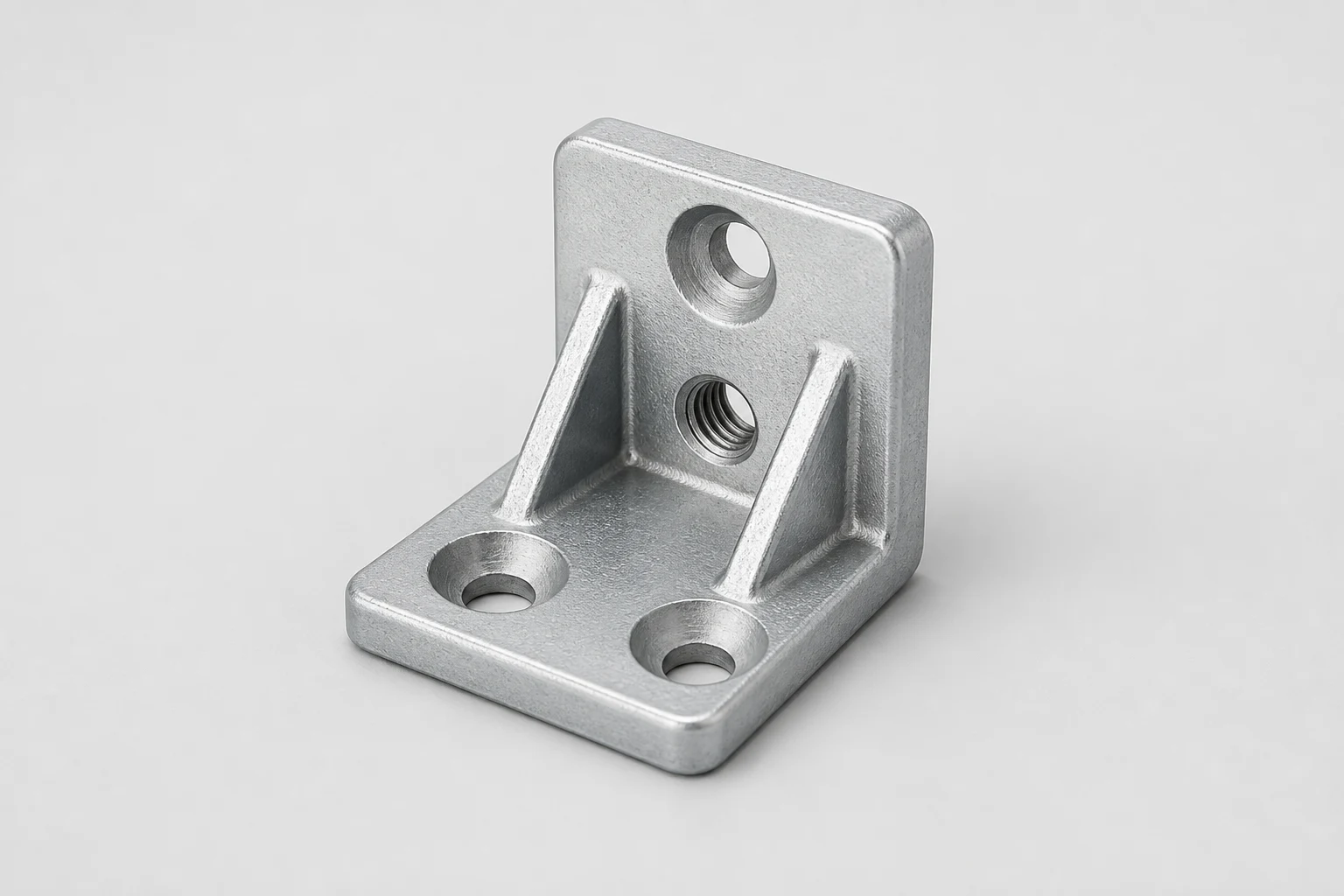
Zinc furniture bracket
A joining fitting die cast in zinc. It has to hold two furniture parts together through repeated assembly and disassembly, and feel solid in the hand when the customer unpacks it.
Casting and machining in Råde. Surface finishing coordinated by us.
Cast parts the end user actually sees, such as furniture fittings. Appearance then becomes a specification on a par with the dimensions: parting line and ejector marks outside the field of view, an even surface and the correct colour.
We cast, machine and finish parts that are meant to be seen, to the customer’s drawing. One of our product examples is a furniture fitting that is machined and coated before delivery.
On a visible part, appearance is a tolerance. What separates it from the other three types is that the defect is not measured, it is seen. That makes the requirement harder to write down and easier to disagree about, which is why it has to be settled before the tool is ordered, not after the first trial run.
Three things must be in the drawing package:
A visible, coated part passes through the most steps: casting, fettling, machining, blasting, transport to the coater, coating, transport back, inspection and packing. We do not powder coat or anodise ourselves. Sub-suppliers do it, ordered and followed up by us, and anodising applies to aluminium only. That means one extra transport leg and a few extra days of lead time, which the quotation states. See surface finishing.
In return you deal with us through the whole chain, including when the colour is off.
What do I need to send? The drawing with the visible faces marked, a colour reference, the surface requirement and quantities per order and per year. Request a quote.
Where can the parting line go? That is decided when the tool is designed, and it is one of the first things we look at in the design review.
Furniture
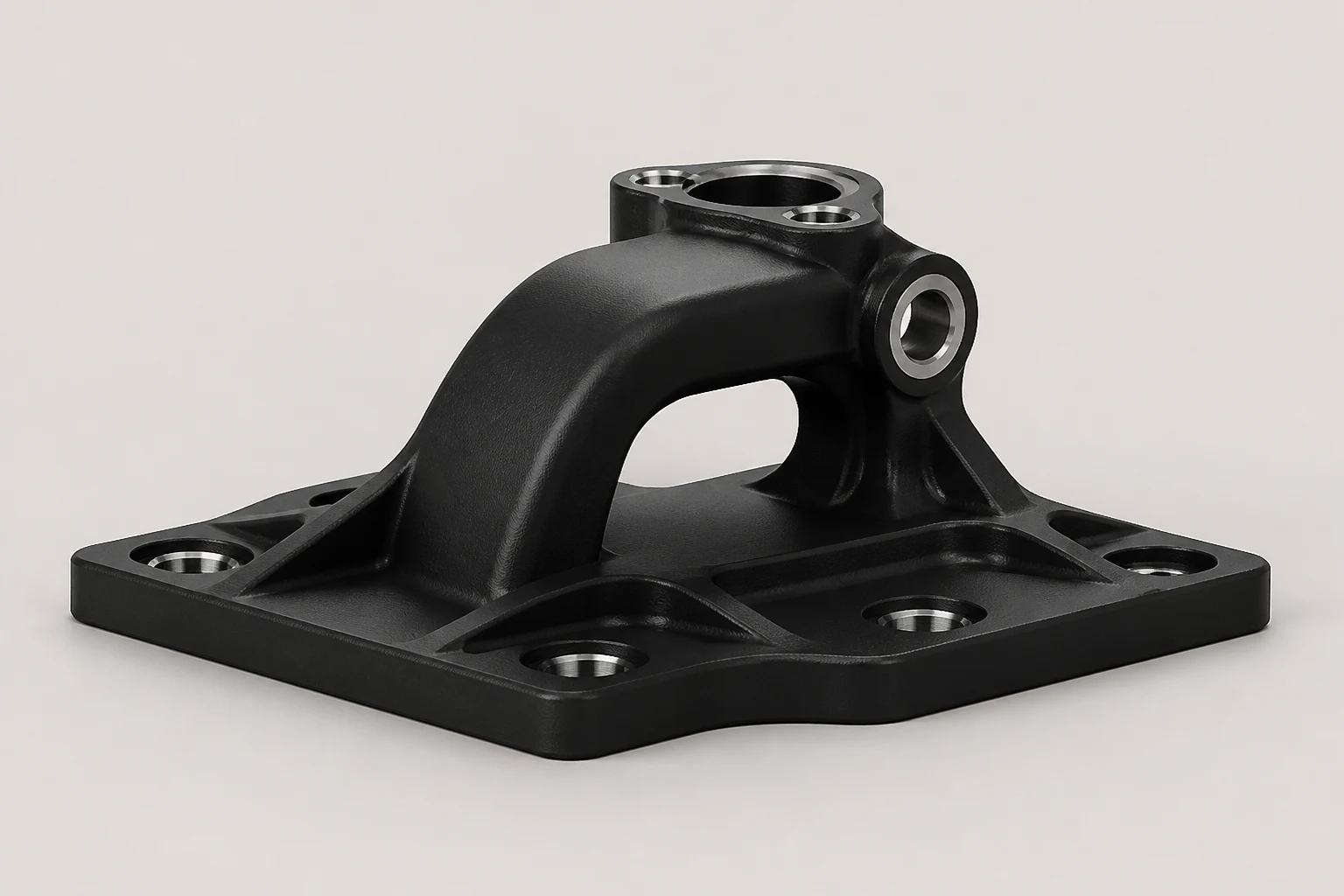
A visible fitting that is cast, machined, blasted, coated at a sub-supplier and inspected before delivery. Nine steps, with the coating and the transport there and back running through the sub-supplier. We follow up all nine.
Visible parts
Nine steps: six in house, and three that run through the sub-supplier, with transport out, coating and transport back. We follow up all nine.
Step 01 In-house
Parting line and ejector points placed outside the visible faces.
Step 02 In-house
Runners, overflows and flash removed.
Step 03 In-house
Faces and holes needing tighter tolerance than casting delivers.
Step 04 In-house
An even matte surface for the coating to key into. Done in house.
Step 05 By a subcontractor
To the coating or anodising supplier.
Step 06 By a subcontractor
Done by a sub-supplier we order and follow up. Anodising applies to aluminium only.
Step 07 By a subcontractor
Back to Råde.
Step 08 In-house
Colour and surface against the agreed reference.
Step 09 In-house
Packed so the visible face survives transport.
How many days the finishing step adds to the lead time is stated in the quotation.
Furniture
A joining fitting die cast in zinc. It has to hold two furniture parts together through repeated assembly and disassembly, and feel solid in the hand when the customer unpacks it.
Furniture
A visible fitting that is cast, machined, blasted, coated at a sub-supplier and inspected before delivery. Nine steps, with the coating and the transport there and back running through the sub-supplier. We follow up all nine.
Send the drawing with colour reference and surface requirement. We will tell you where the parting line can run.
Send the drawing and a rough quantity. We look at the part before we work out a price.
We count visits anonymously to make the website better. Google Analytics only loads if you say yes. Read more