Zinc
Furniture
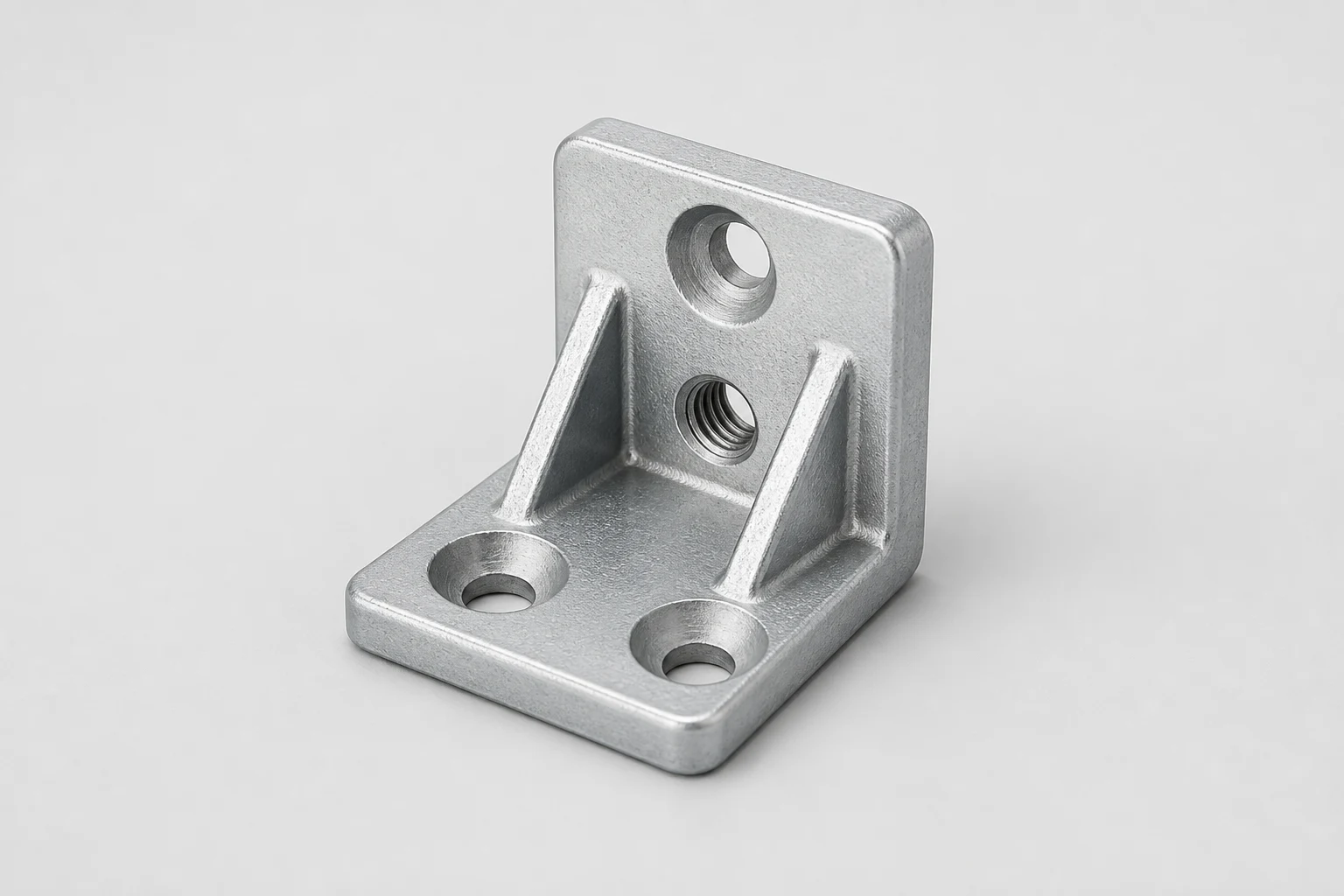
Zinc furniture bracket
A joining fitting die cast in zinc. It has to hold two furniture parts together through repeated assembly and disassembly, and feel solid in the hand when the customer unpacks it.
Casting and machining in Råde. Surface finishing coordinated by us.
Furniture
Fittings for furniture production, cast in zinc. The surface is part of the product, and the thread has to survive the furniture being assembled and taken apart more than once.
Common failure points
Why casting
Zinc die casting usually gives a fine surface straight from the tool, sharp detail and long tool life. That is one reason many furniture fittings are cast in zinc, and one of the few processes where the part is often finished as it leaves the tool.
Joining fittings: leg mounts, corner fittings, hinges, connectors. Visible fittings: handles, decorative fittings, end caps. The first are hidden and only have to work. The second are part of the design.
The surface is a specification. On a visible furniture fitting the parting line is not a detail — it is either hidden, or it is a deliberate design line. The same goes for the ejector points. This is decided when the tool is designed, and it cannot be corrected afterwards without rebuilding the tool.
Colour over time. A furniture range sells for many years. The fitting delivered in year five must match the one delivered in year one. That places demands on the colour reference, on the coating supplier and on nobody changing the powder without saying so.
Threads that survive the flat pack. Furniture is assembled, moved, taken apart and assembled again. The thread in the fitting has to survive that. Zinc suits it well: soft enough for the thread to form cleanly, hard enough for it to hold. If the fitting will be unscrewed many times, a threaded insert is worth considering.
Weight as perceived quality. Zinc weighs more than aluminium. In the hand that reads as solidity. It is a real reason a furniture fitting is cast in zinc rather than aluminium, even though aluminium would be lighter.
This is a price-pressured market. On a simple fitting in high volume an importer will often be cheaper per part, and claiming otherwise does not help.
What we can offer is a short run, tooling in Norway, one point of contact and a fitting that can arrive threaded and coated. How batch sizes and call-offs can work is settled in the quotation. If none of that is worth anything to you, we are probably the wrong supplier, and it is better to establish that in the first conversation.
Which colour systems the coater handles, the minimum coating batch and how many days the finishing step adds to the lead time are stated in the quotation.
Fittings and threaded parts made to drawing
A joining fitting die cast in zinc. It has to hold two furniture parts together through repeated assembly and disassembly, and feel solid in the hand when the customer unpacks it.
Visible parts
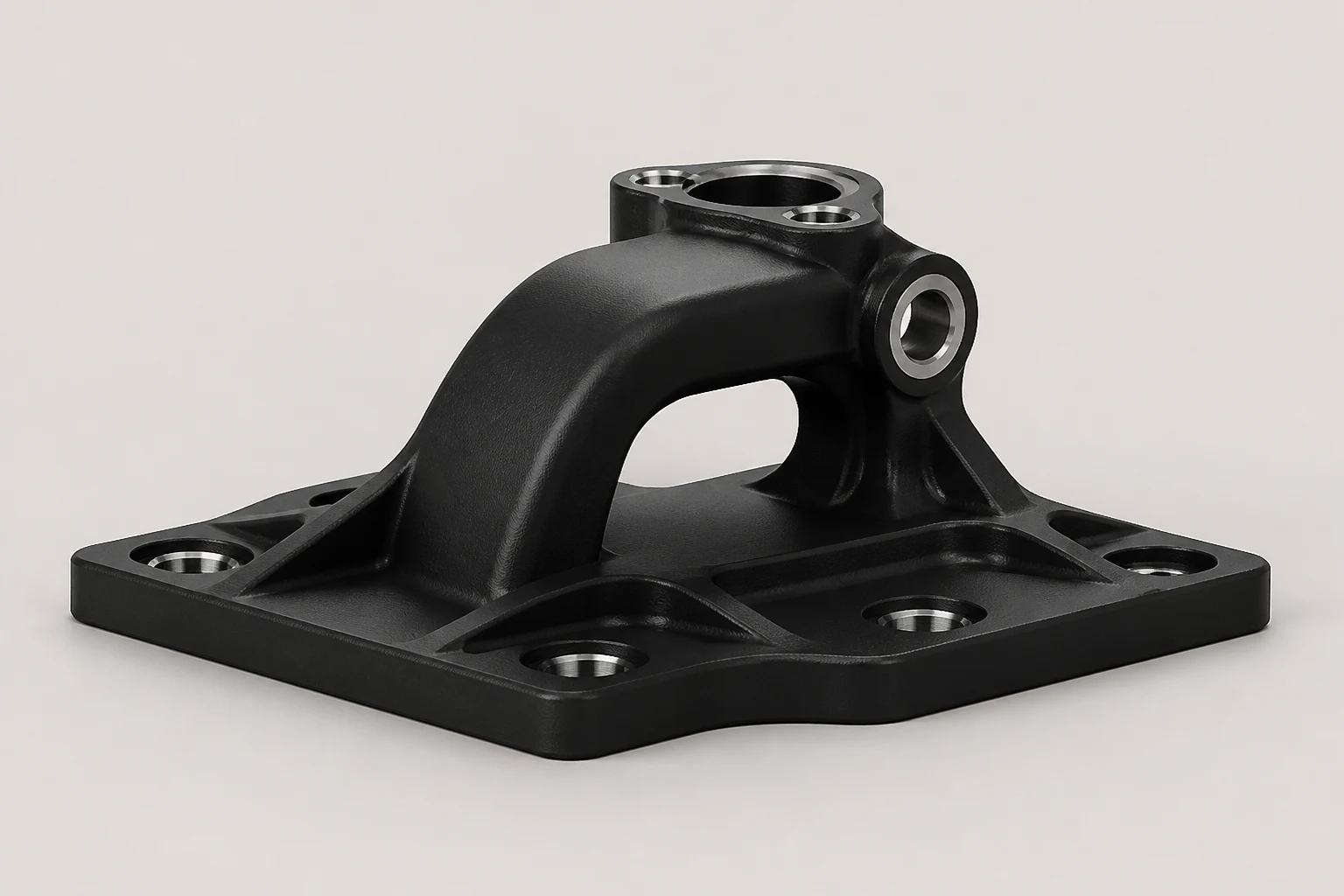
A visible fitting that is cast, machined, blasted, coated at a sub-supplier and inspected before delivery. Nine steps, with the coating and the transport there and back running through the sub-supplier. We follow up all nine.
Furniture
Furniture
A joining fitting die cast in zinc. It has to hold two furniture parts together through repeated assembly and disassembly, and feel solid in the hand when the customer unpacks it.
Furniture
A visible fitting that is cast, machined, blasted, coated at a sub-supplier and inspected before delivery. Nine steps, with the coating and the transport there and back running through the sub-supplier. We follow up all nine.
Include the colour reference and annual volume, and you will get an honest answer on whether we are the right supplier.
We look at the part and the requirements before we work out a price, and tell you if casting is not the right method.
We count visits anonymously to make the website better. Google Analytics only loads if you say yes. Read more