Zinc
Electronics and audio
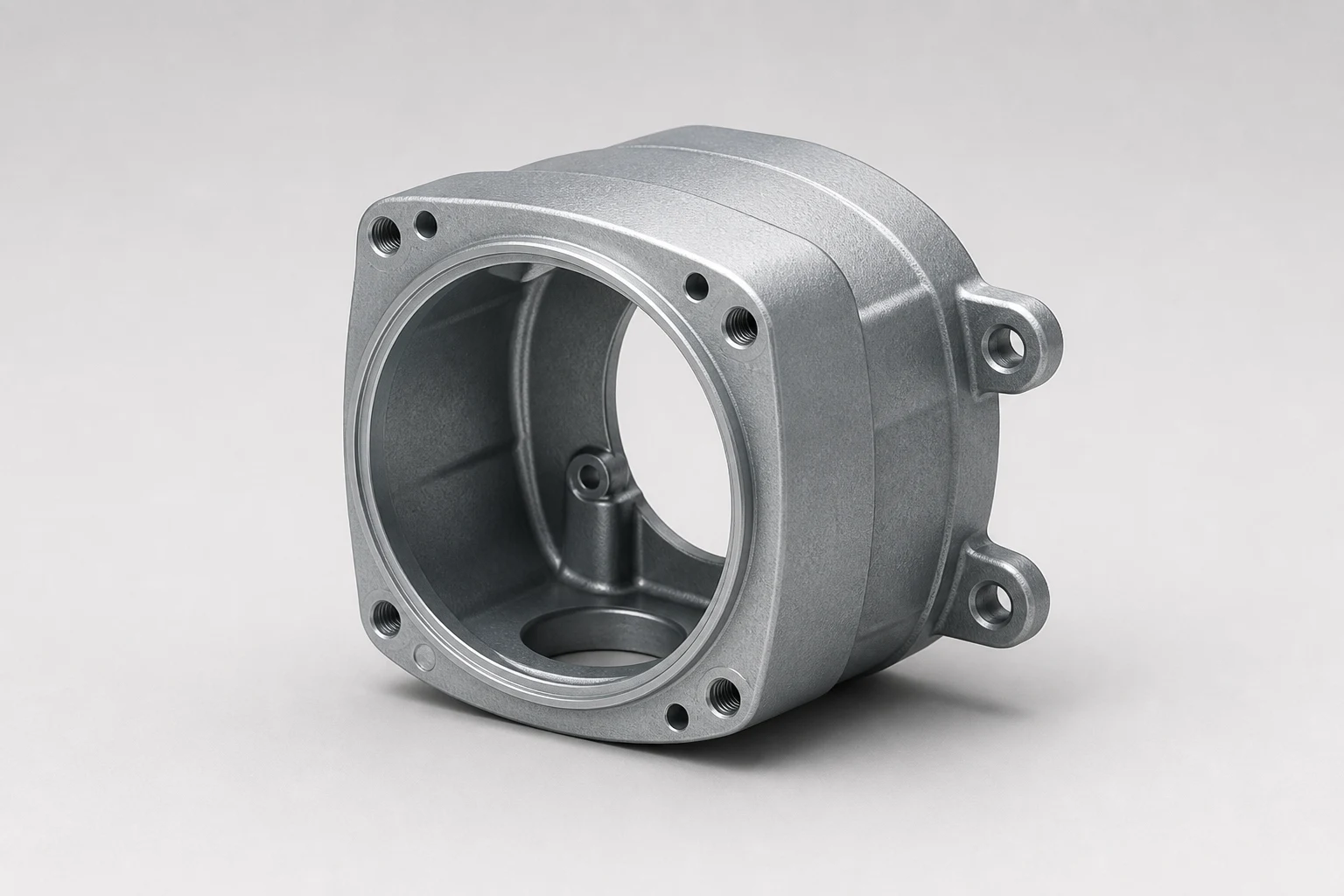
Zinc loudspeaker housing
An enclosing part for audio equipment, die cast in zinc. Here weight is not a compromise — it is the function. A heavy housing damps unwanted vibration, and zinc is the heavier metal.
Casting and machining in Råde. Surface finishing coordinated by us.
Electronics and audio
Housings, covers and chassis where the metal does three jobs at once: it shields electromagnetically, conducts heat away and holds the geometry stable.
Common failure points
Why casting
A die cast housing is a continuous metal shell with every mounting feature cast in. The alternative — plastic with metallisation, or sheet metal with welded brackets — takes more operations to achieve the same, and the plastic housing must be metallised anyway to shield.
Housings and covers for instruments, control units and portable equipment. Chassis and mounting frames. Loudspeaker enclosures and casings for audio equipment. Cooling housings where the electronics dissipate heat. We have supplied a loudspeaker housing die cast in zinc.
EMC. A continuous metal housing is a Faraday cage. That is the main reason metal enclosures hold their ground against plastic in equipment that must pass an EMC test. But the shielding breaks wherever the housing loses electrical contact with itself, and powder coating insulates. If the housing is to shield, the contact faces must either be masked before coating or machined clean afterwards — and that has to be on the drawing from the start.
Heat. Metal conducts heat out of the enclosure. That can remove the need for a fan, and with it a moving part, a noise and a hole in the enclosure. Aluminium generally conducts heat better than zinc, but the actual value depends on the alloy. Specific figures are provided on request for the alloy in question.
Sealing. If the enclosure needs an IP rating, the sealing face must be flat and carry a groove for the gasket. Flatness on a cast face across a larger area is a real challenge: uneven wall thickness causes distortion during cooling. The remedy is either to design an even wall from the start, or to mill the face after casting.
Mass as a function. In audio equipment weight is not a problem — it is the point. A heavy housing damps unwanted vibration in the cabinet. Then zinc is the right material, not a compromise. This is one of the clearest illustrations of why material choice should follow function.
Minimum wall thickness, the flatness of sealing faces and how tightness, an IP rating or EMC is to be verified are settled for the specific part. We do not promise tightness or approvals in general terms. There is more on housings under housings and covers.
Cast housings and covers in aluminium and zinc
An enclosing part for audio equipment, die cast in zinc. Here weight is not a compromise — it is the function. A heavy housing damps unwanted vibration, and zinc is the heavier metal.
Electronics and audio
Electronics and audio
An enclosing part for audio equipment, die cast in zinc. Here weight is not a compromise — it is the function. A heavy housing damps unwanted vibration, and zinc is the heavier metal.
Answer that in the enquiry and we will answer on material, wall thickness and which faces have to be machined.
We look at the part and the requirements before we work out a price, and tell you if casting is not the right method.
We count visits anonymously to make the website better. Google Analytics only loads if you say yes. Read more